Two Sketches, One Sighting: Reading Drift in Contact Witness Drawings
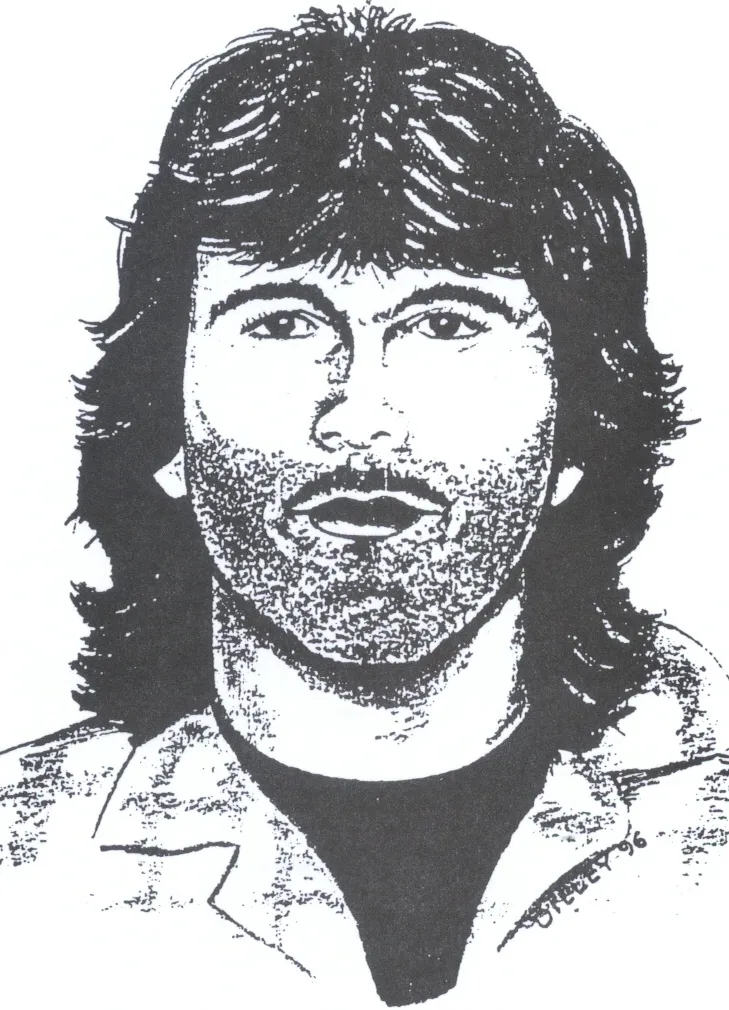
Photo: Unknown authorUnknown author, Public domain, via Wikimedia Commons
Ask someone to draw the thing they saw in the sky, and you learn something right away. Ask them again two weeks later, and you learn something else—often something less comfortable. The shape has shifted. A light has moved. A detail that seemed central in the first drawing has faded, while a new feature has appeared with confident pen strokes. For a field investigator, that gap can feel like a red flag. For a consciousness-literate researcher, it can feel like a map.
The second-sketch trap
Contact reports rarely arrive as clean data. They arrive as stories, gestures, late-night phone calls, and sometimes a quick drawing on the back of an envelope. The first sketch often becomes the emotional anchor of the case: this is what the witness saw. When a follow-up sketch two weeks later does not match, the temptation is to treat the mismatch as a credibility problem. Did the witness embellish? Did they forget? Are they changing the story?
That reaction is understandable, but it skips a crucial point. A drawing is not a photograph. It is a translation from perception to memory to motor output to cultural schema. Each of those steps is active. Memory researchers have long described recollection as reconstructive rather than replay-like; every retrieval can modify the memory itself. In contact cases, where emotion is often high and the stimulus is ambiguous, that reconstructive process has plenty of room to work.
What a repeated drawing actually tests
A sketch-replication protocol is simple in theory: ask the witness to draw the sighting, wait an interval, then ask again under similar conditions. In practice, the method tests several things at once. It tests perceptual stability—which features remain invariant across drawings. It tests narrative drift—which elements move, grow, shrink, or acquire new labels. And it tests source monitoring—whether the witness can distinguish what they remember seeing from what they later read, heard, or discussed.
In 2026, that last point matters more than ever. Witnesses may encounter social media reconstructions, podcast breakdowns, or AI-generated images before the second sketch. A new fin on the craft may not be a lie. It may be an imported detail that has become fused with the original memory. The sketchpad replication problem is less about the sketchpad and more about the assumption that memory should behave like a file cabinet.
Drift is not disqualification
A changed drawing does not automatically mean the report is false. It also does not prove anything anomalous happened. A single sketch is neither proof nor disqualification. It is one artifact from a complex event. The more useful question is not 'which drawing is accurate?' but 'what kind of change occurred, and what might explain it?'
Some changes are ordinary compression. The witness remembers the overall impression and fills in the rest with a familiar template: a saucer, a triangle, a row of lights. Some changes are social. A friend says the object sounded like a specific craft, and the next drawing quietly adopts that vocabulary. Some changes are state-dependent. If the original experience happened during a hypnagogic moment, a long drive, or a period of intense stress, recall may shift with the witness's current state.
None of that requires deception. It requires a model of memory that treats drift as normal.
A practical protocol for field investigators
For investigators who want to use repeated drawings without turning them into a gotcha test, a few habits help.
- Collect the first sketch before a long group interview, before showing comparable images, and before the witness has had time to rehearse the story for an audience.
- Use the same materials and the same neutral instruction both times: draw what you remember, not what you think it should look like. Avoid naming possible shapes.
- Keep the first sketch out of view during the second session. Do not ask the witness to correct or improve the earlier drawing.
- Ask for confidence by feature, not just overall confidence. Was the number of lights clear? Was the outline clear? Was the motion clear?
- Ask a source-monitoring question: do you remember seeing this detail, or do you remember discussing it, dreaming about it, or seeing something similar later?
- Have independent raters compare the drawings blind to the witness's narrative. Note invariant features first, then drift.
- Treat the comparison as a conversation starter, not a confrontation. 'What changed here?' is more useful than 'Why did you change this?'
The consciousness angle
Contact experiences are often described as more than visual. Witnesses report a sense of presence, a shift in attention, missing time, or an emotional tone that does not fit neatly into a sighting report. If the experience occurred in an altered or liminal state, the drawing may be an artifact of state-dependent retrieval. The second sketch may reflect a different state, a different audience, or a different stage of metabolizing the event.
That is where the sketchpad replication problem becomes interesting for consciousness studies. The gap between drawings is not just noise. It can show how a mind stabilizes an anomaly, how it borrows available imagery, and how it negotiates the line between 'I saw this' and 'this is how I now explain it.' The drift is part of the phenomenon, not simply an error to be scrubbed away.
Reading the pair, not the picture
The best use of repeated witness drawings is comparative and humble. Look for features that survive the interval: the angular relationships, the number of distinct lights, the direction of motion, the odd detail that does not match any familiar template. Then look at what moved. Did the outline become more conventional? Did new labels appear? Did the witness become more confident about a detail that was vague the first time?
Those questions do not settle the UFO question. They do something more practical: they help separate the experience from the story about the experience. In 2026, with images and reconstructions circulating faster than any field notebook, that separation is worth protecting. The second drawing is not a trap. It is a second window—and sometimes a clearer view of the mind doing the remembering.